Why we now collect self-submitted testimonies
By Alice Lalla, from the Communications working group at BVMN. Published on 24 November 2026.
It has never been more difficult to directly document border violence against people on the move. The adoption of measures that repress and criminalise solidarity work all over Europe - in particular through the New EU Pact on Migration and Asylum - has made it harder to safely collect direct testimonies from people on the move during their journeys.
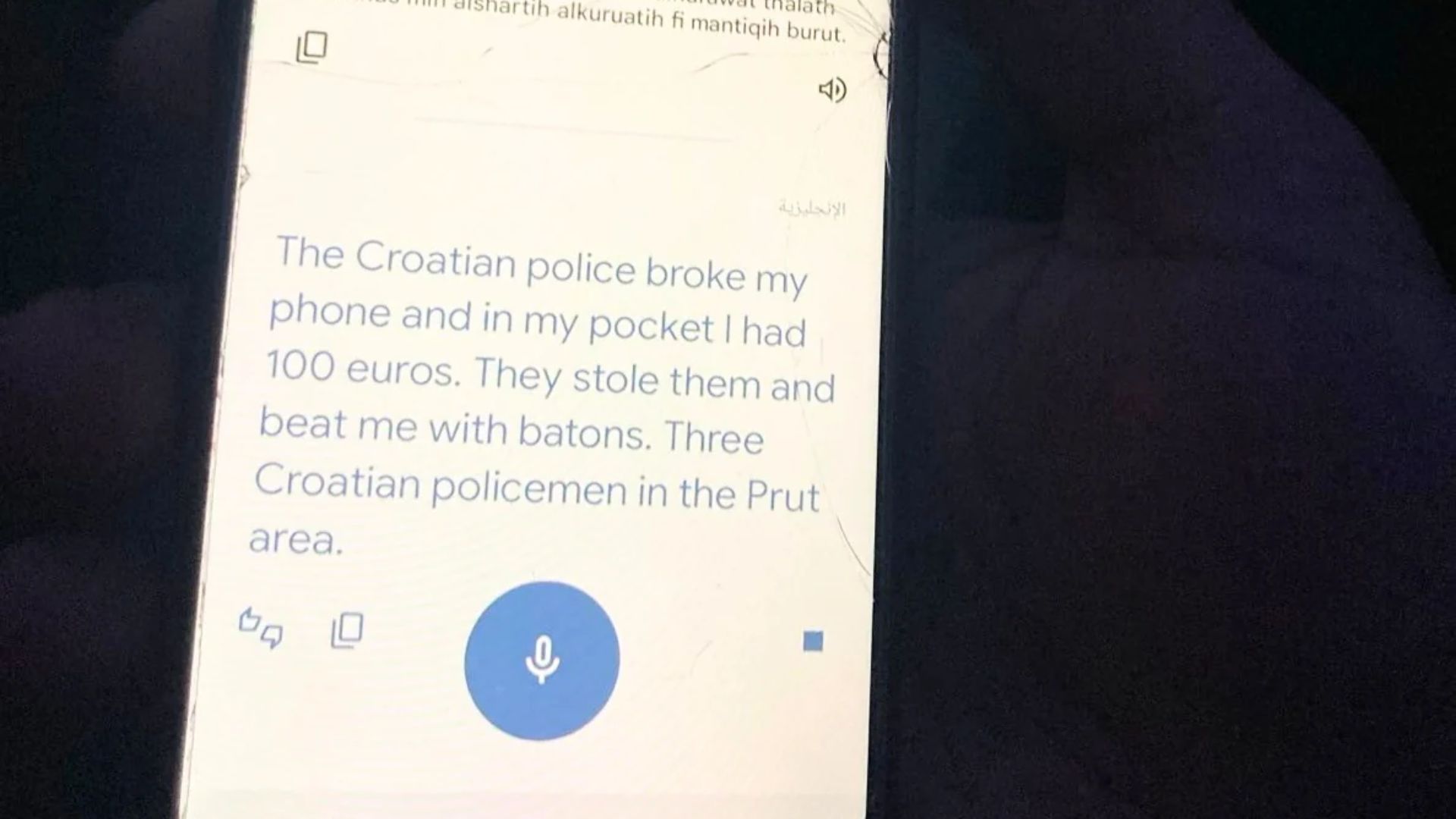
But criminalisation of solidarity, along with the much more violent criminalisation of people on the move, has meant spaces where testimonies can be collected directly have shrunk significantly. In many cases, people on the move reached out to us wantingto highlight their experience, and in an attempt to pursue accountability wherever possible. In response, BVMN is now moving to publish self-submitted testimonies as well.
What is a self-submitted testimony?
Put simply, this is a submission made to our public communication channels where a person on the move reports an instance of violence they have been subject to. These can cover cases of police violence, instances of negligence and oversight that led to harm, or, more commonly, reports of pushbacks.
Individuals who contact us to report instances of violence they experienced or witnessed might do so for different reasons. Therefore, it is crucial to clarify to them the aims and limits of our work in order to ensure full transparency. BVMN’s main goal is to document the shapes that border violence takes in Europe, while, for people who have been directly exposed to them, their needs are often more practical and immediate.
This is a central dilemma within our work: balancing historical documentation with needs for direct support. We try to manage expectations by explicitly clarifying that while we collect data for research, advocacy, and historical memory, we cannot provide direct legal, medical, or emergency assistance. Instead, we rely on existing referral pathways to connect people with external support services. BVMN itself does not provide direct support to people on the move, though many of our member organisations do.
Some people might choose to disengage from the process at that point. And that’s absolutely fine. In other cases, they will willingly ask for their story to be shared, at which point we move onto the next step.
In cases where our interlocutor does not consent to publishing their story, the information they shared with us will be archived using the same process we use for all our communications.
Publication
At this point, the submitted information follows the same process that we use for all the data we publish. First, our editors verify its text, to ensure it follows our writing guidelines. Just with direct testimonies, information about the circumstances of the incident are extracted, which allows us to add it to our map of Pushback Testimonies.
In fact, one of the first self-submissions we have collected has already been published. It recounts the experience of a young trans woman who was pushed back at the Croatian-Bosnian border in late August, and who reached out to us after she was forced to return to her home country. In this instance, remote communication was the only option open to this person to contact us and document her case. You can read more about it here.
The Border Violence Monitoring Network accepts submissions for its blog. To contribute, please send your submission to press@borderviolence.eu
Thank you for your interest. We look forward to your contribution!